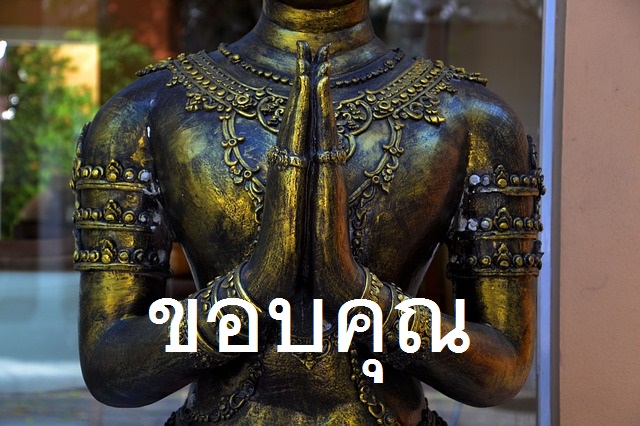
I will introduce you one of the famous words in Thai as much as “sah wah dee”.
Thank you ⇒ Khob khun ka ขอบคุณค่ะ(kʰɔ̀ɔp kʰun kʰâ)
When you say this word slowly, you can pronounce “kʰɔ̀ɔp kʰun kʰâ“, but Thai natives normally speak fast like “kʰɔ̀ɔpun kʰâ“.So if you learn just speaking, you just memorize “kʰɔ̀ɔpun kʰâ”.
Sponsored Link
Contents
Analysis “Thank you” in Thai
If you are already studying Thai or living in Thailand, you will recognize that “kun คุณ(kʰun)” means “you”.
Then what “khob ขอบ” means?
kʰɔ̀ɔp ขอบ ⇒ answer, repay, receive
So ขอบคุณค่ะ(kʰɔ̀ɔp kʰun kʰâ)actually means “answer to you” ⇒ Thank you
By the way, “kʰâ” from the example “kʰɔ̀ɔp kʰun kʰâ” make the sentences polite for women.
If you are a man, you should to say ขอบคุณครับ(kʰɔ̀ɔp kʰun kʰráp)
“Thank you” for men ⇒ Khob khun krub ขอบคุณครับ(kʰɔ̀ɔp kʰun kʰráp)
“Thank you” for women ⇒ Khob khun ka ขอบคุณค่ะ(kʰɔ̀ɔp kʰun kʰâ)
Thai has many Thank you
English also has “thank you” “thanks” “cheers”・・・・・ many ways to say thank,
Thai also has a lot of expressions and I will tell you some of them.
“Thank you” elder can use
Actually, Thank you in Thai language is just “kʰɔ̀ɔp kʰun ขอบคุณ”
kʰráp or kʰâ make sentences polite so elders can use just “kʰɔ̀ɔp kʰun ขอบคุณ” without polite expression.But foreigners should use kʰráp or kʰâ and it makes speakers cute or lovely.
However, some of you think that it is strange that we use kʰráp or kʰâ to young children.
In those case, you can use “na นะ (náʔ)“ instead. “na” makes sentences soften.
koop kun na ขอบคุณนะ(kʰɔ̀ɔp kʰun náʔ) ⇒ thanks
casually thank you
If you want to say Thank you more casually to good friends or younger,
koop jai ขอบใจ(kʰɔ̀ɔp cai) ⇒ thanks
you can use this one.
jai ใจ(cai) ⇒ heart, mind
jai means heart, so it can be thought that “receive to heart” or “answer to heart” ⇒ Thank you
But if you want to say Thank you to the first meeting people, it is better to use “Khob khun krub” or “Khob khun ka”, even he or she looks younger than you.
Thai use Thank you in English too
Some of Thai young people use Thank you, but the pronunciation is different a little.
ten kiw แต้งกิ้ว(tɛŋ kîw)
This is normal expression in English but it is regarded as one of slang in Thai. So normally Thai don’t use [ten kiw] to superiors or elders.
But it is normal that foreigners use Thank you so don’t mind about it.