laborday

【Thai Holiday in Thai language】 Labor Day (May Day)

วันแรงงาน name Labor Day date May 01 holiday 〇 (Private company only) alcohol can drink What is a labor day in Thailand A lot of countries make first May as Labor day and Thailand too. In Labor day in Thailand, normally all office worker get the day off, but department stores or convenience stores and any other services are available in this day. Labor day is not have any relationship with buddhist holiday, so we can enjoy beers or alcoholics anywhere.   Labor day in Thai language Labor day in Thai is wan reen gaan วันแรงงาน(wan rɛɛŋ ŋaan) And this word can be separated into 2 parts.   What is วัน wan ? […]
Read more
traffic

tit ติด in Thai means “stick”

tit ติด(tìt)can be translated “stick” in Thai language but this word also has other meanings. There are many native Thai speakers to use “tit + the other word” How to use tit ติด(tìt) For example, “rot รถ(rót)”means cars in Thai. And if you use “tit” with “rot” rot tit รถติด (rót tìt) ⇒ car stick ⇒ traffic jam “rot tit” means traffic jam in Thai. Today we have heavy traffic jam ⇒ wan nii rot tit maak วันนี้รถติดมาก(wan níi rót tìt mâak) Or “too ต่อ(tɔ̀ɔ)” means continue or connect, and this word also can use with tit. tit too ติดต่อ(tìt tɔ̀ɔ) ⇒ contact contact to a person in charge ⇒ tit too jao naa tii ติดต่อเจ้าหน้าที่(tìt tɔ̀ɔ câo nâa tʰîi)   […]

Read more
thank

Thank you in Thai Language in different situations

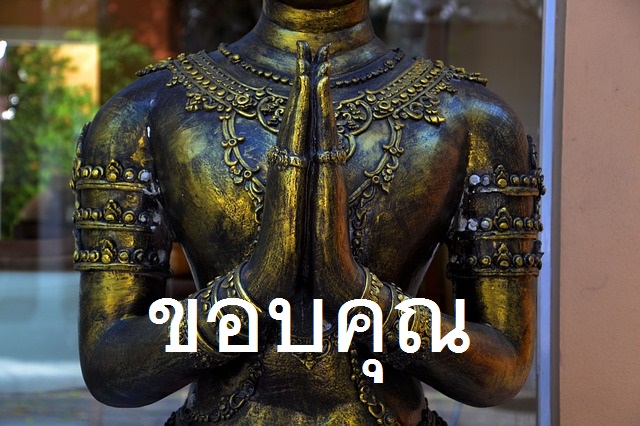
I will introduce you one of the famous words in Thai as much as “sah wah dee”. Thank you  ⇒ Khob khun ka ขอบคุณค่ะ(kʰɔ̀ɔp kʰun kʰâ) When you say this word slowly, you can pronounce “kʰɔ̀ɔp kʰun kʰâ“, but Thai natives normally speak fast like “kʰɔ̀ɔpun kʰâ“.So if you learn just speaking, you just memorize “kʰɔ̀ɔpun kʰâ”. Analysis “Thank you” in Thai If you are already studying Thai or living in Thailand, you will recognize that “kun คุณ(kʰun)” means “you”. Then what “khob ขอบ” means? kʰɔ̀ɔp ขอบ ⇒ answer, repay, receive So ขอบคุณค่ะ(kʰɔ̀ɔp kʰun kʰâ)actually means  “answer to you” ⇒ Thank you By the way, “kʰâ” from the example “kʰɔ̀ɔp kʰun kʰâ” make the sentences polite for […]

Read more